From rule to city
Scroll to grow the city, drag to turn it
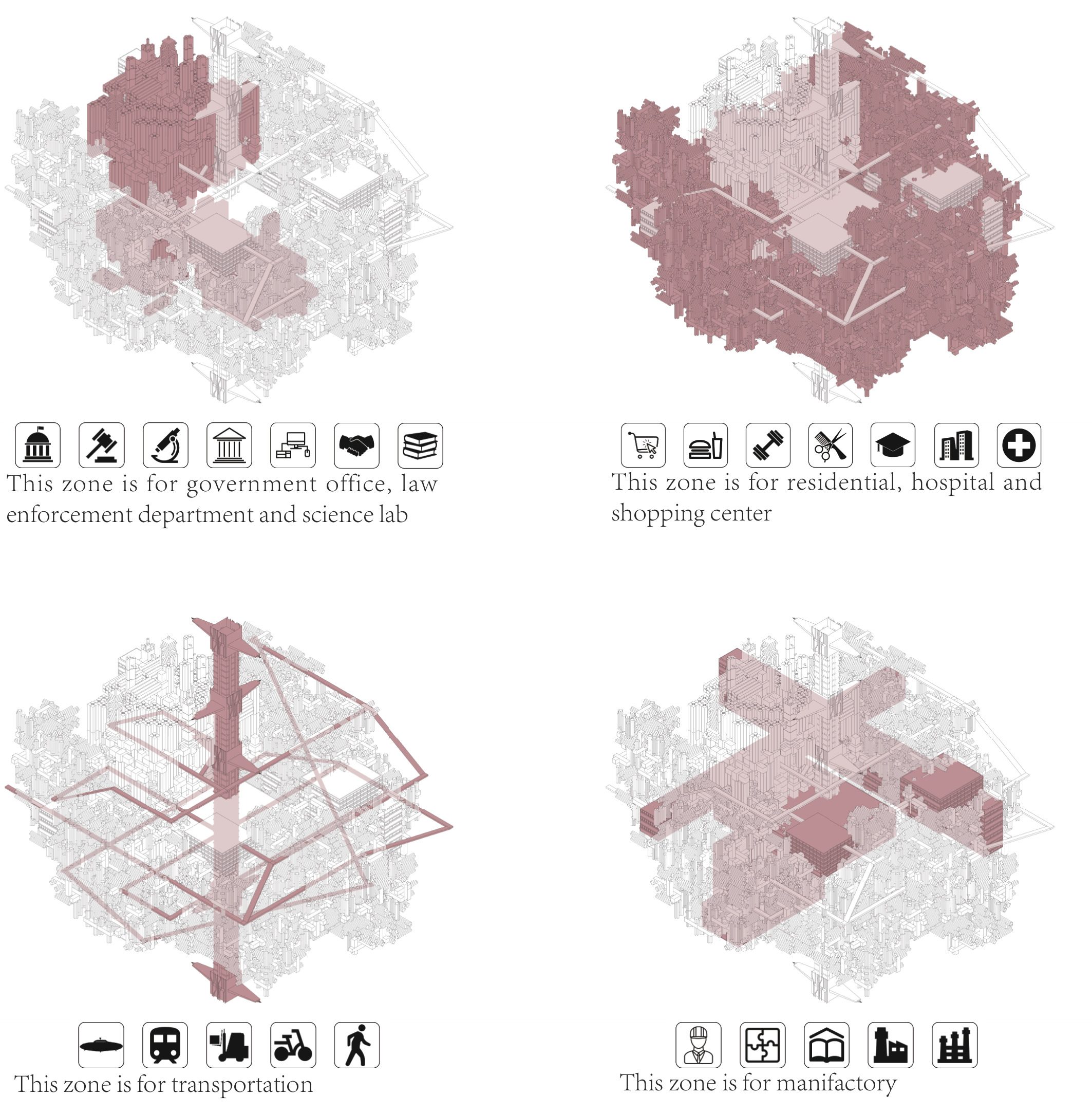
A diagram of the method, grown live: a growth rule adds unit-tower bars around one transport spine generation by generation, selection removes the loose ends, four zones tint the shell and walkways reach out between the blocks.
How cities grow
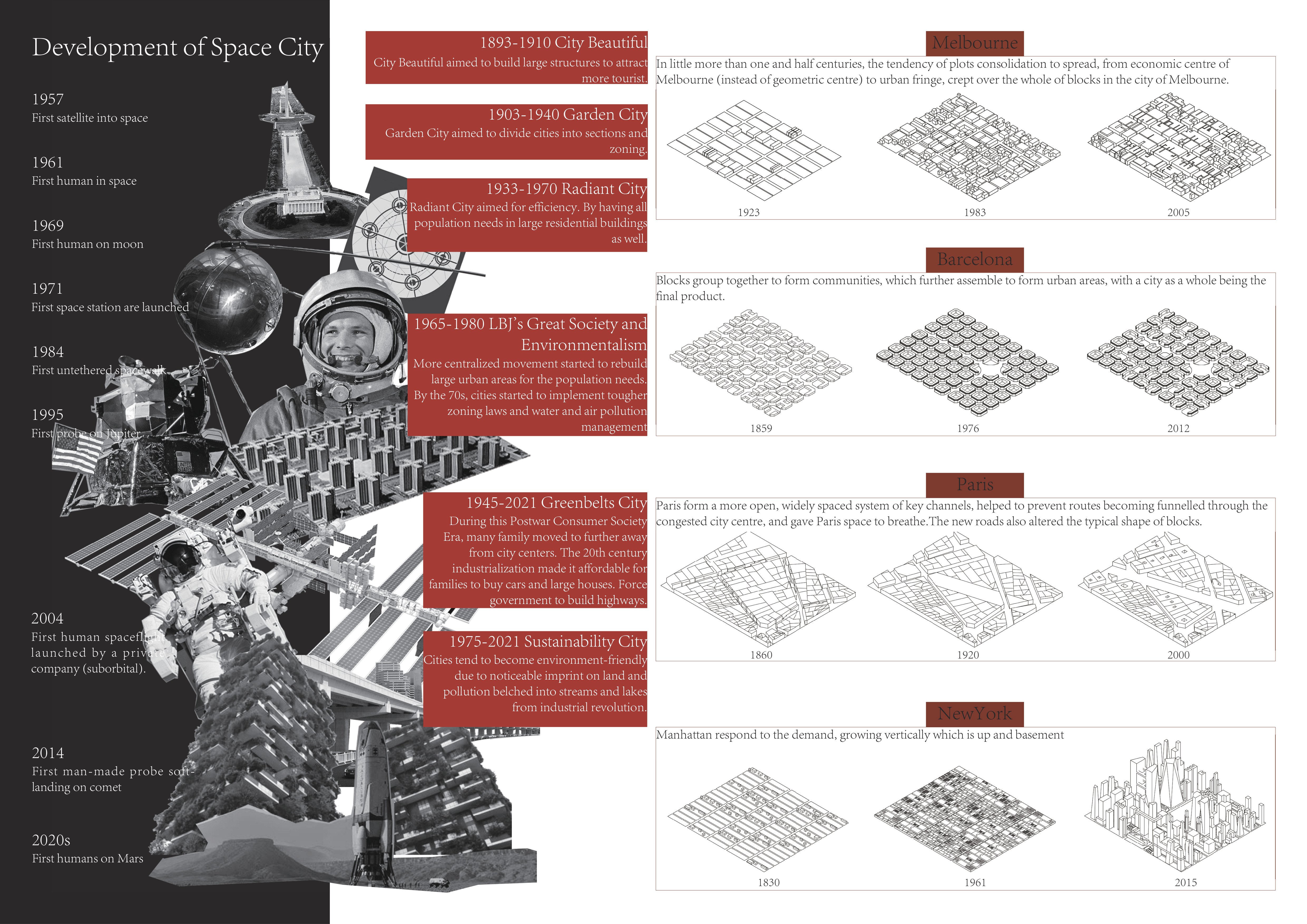
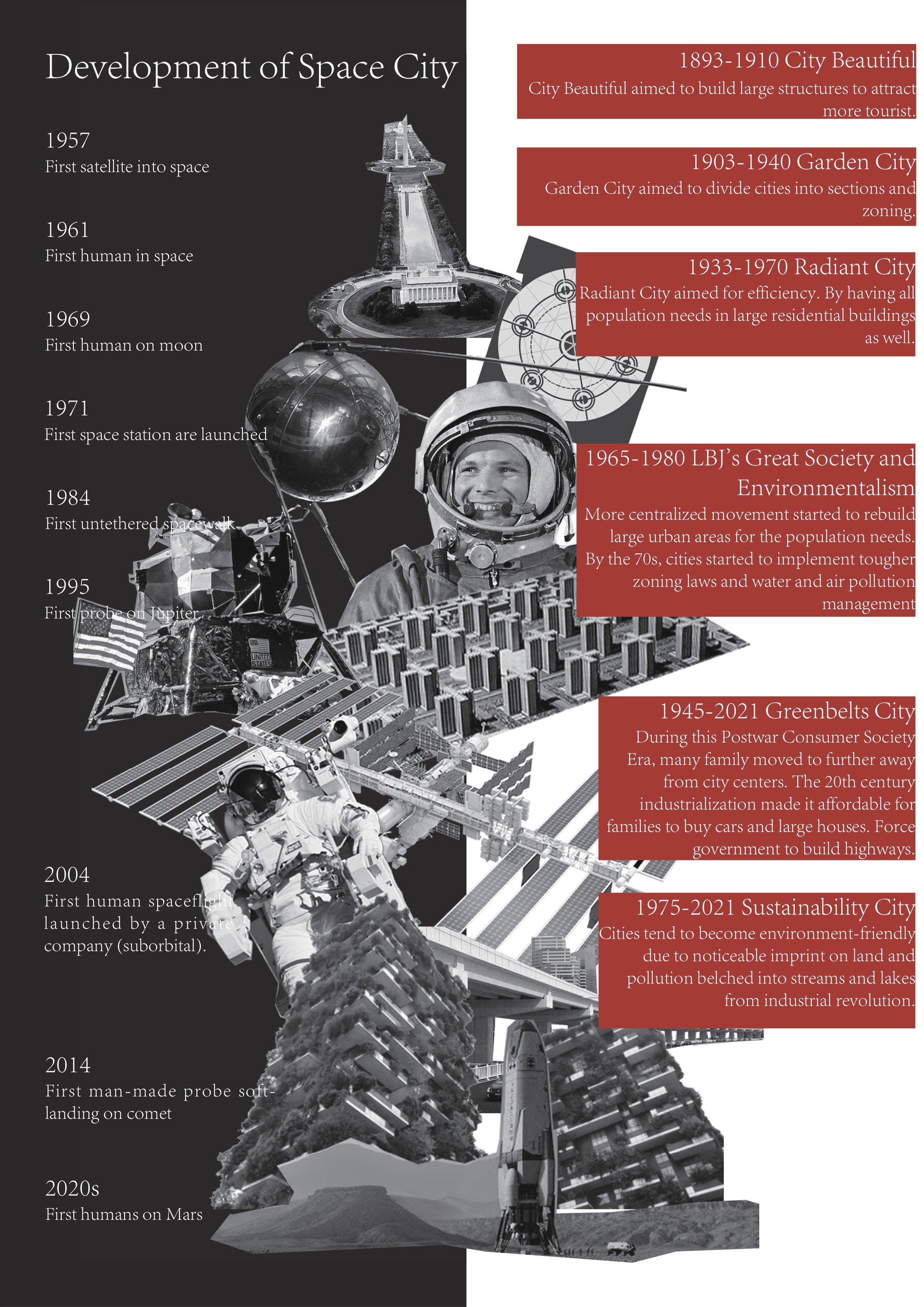
The research sets the space race beside a century of urban models, from the City Beautiful and the Garden City to the sustainable city.
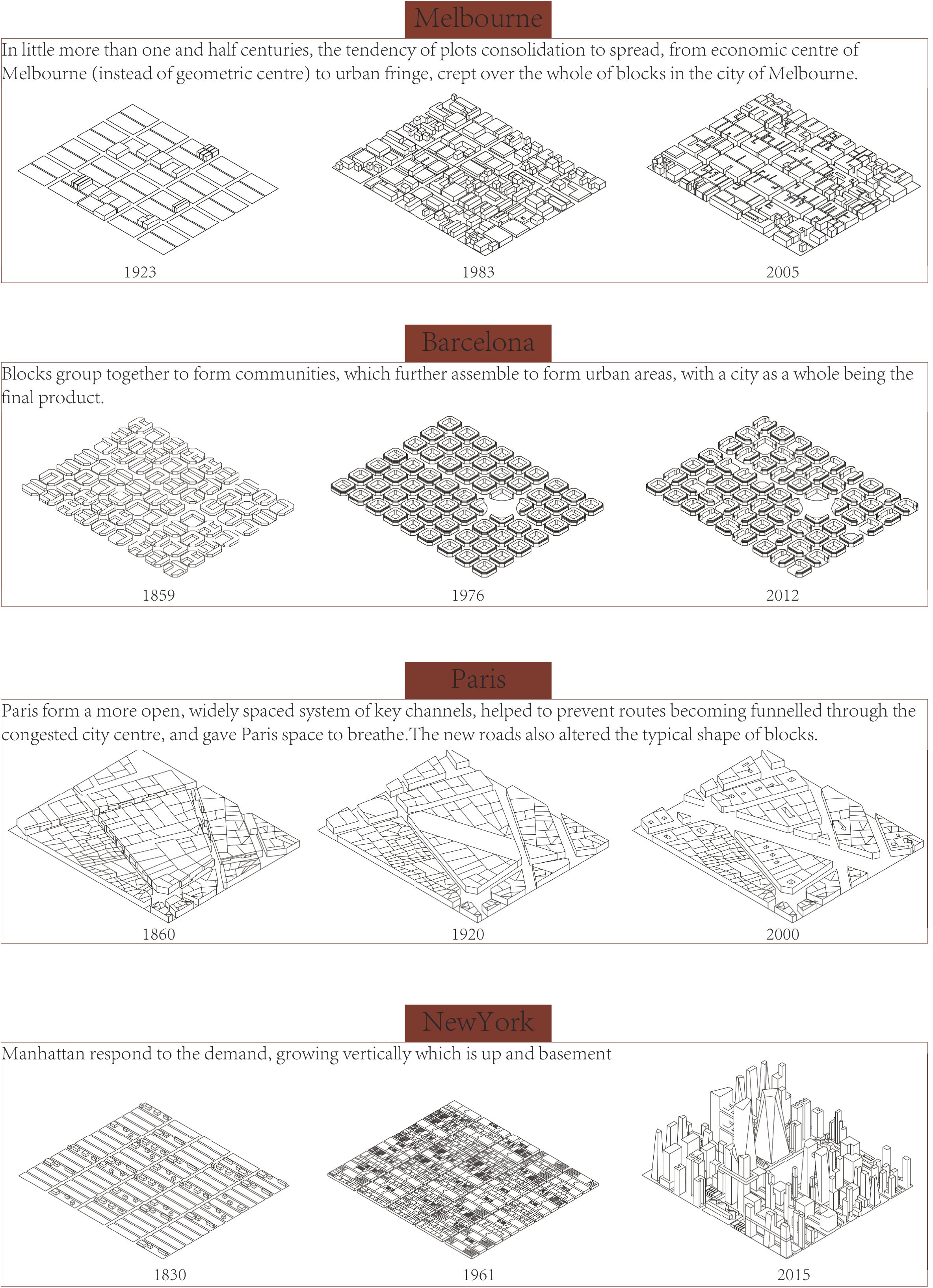
Four cities show how blocks change over time: in Melbourne plots consolidate from the economic centre out to the fringe; in Barcelona blocks group into communities and then urban areas; Paris opens wide channels so the city can breathe; Manhattan grows vertically, up and into the basement.
Unit towers and zones
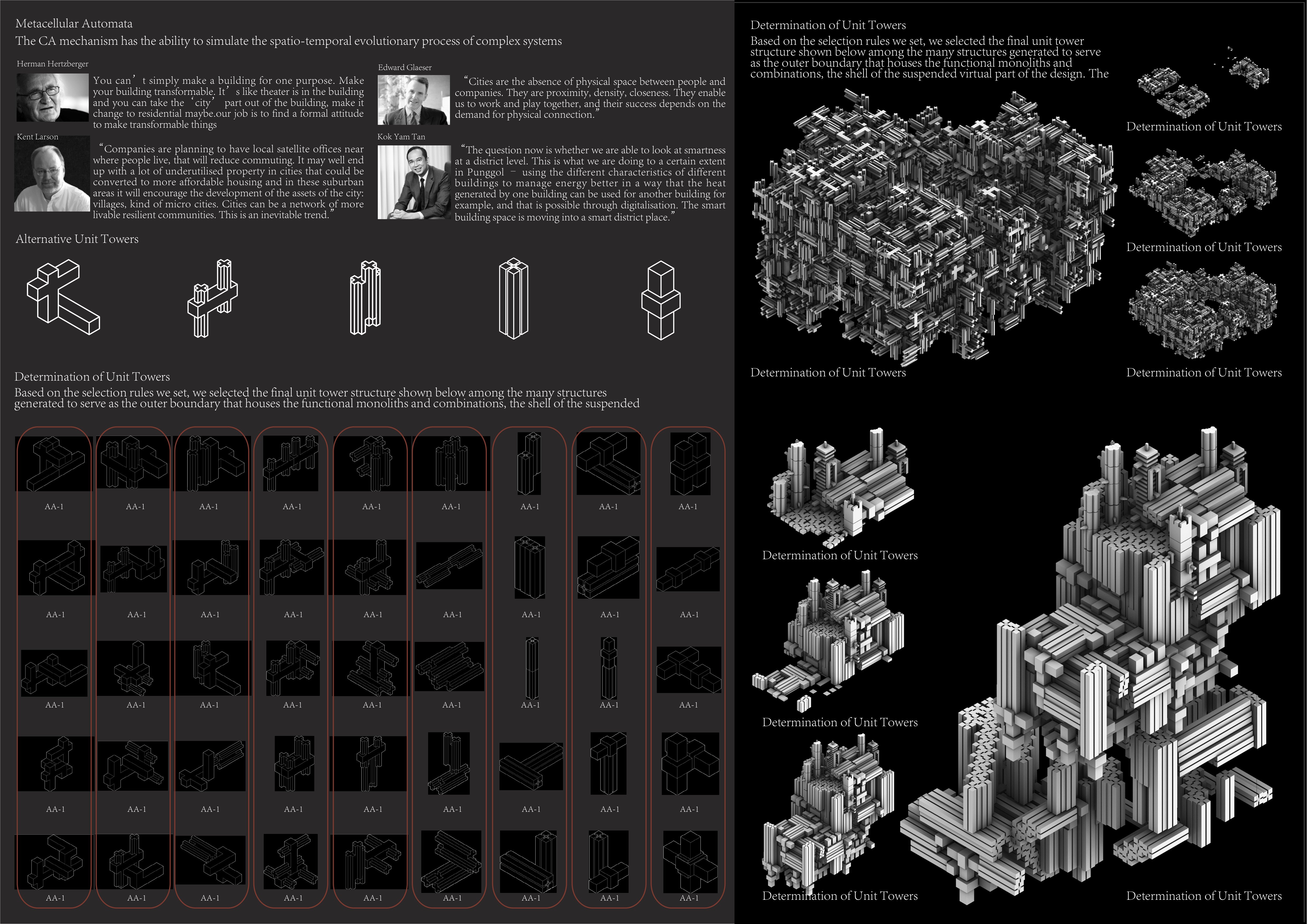
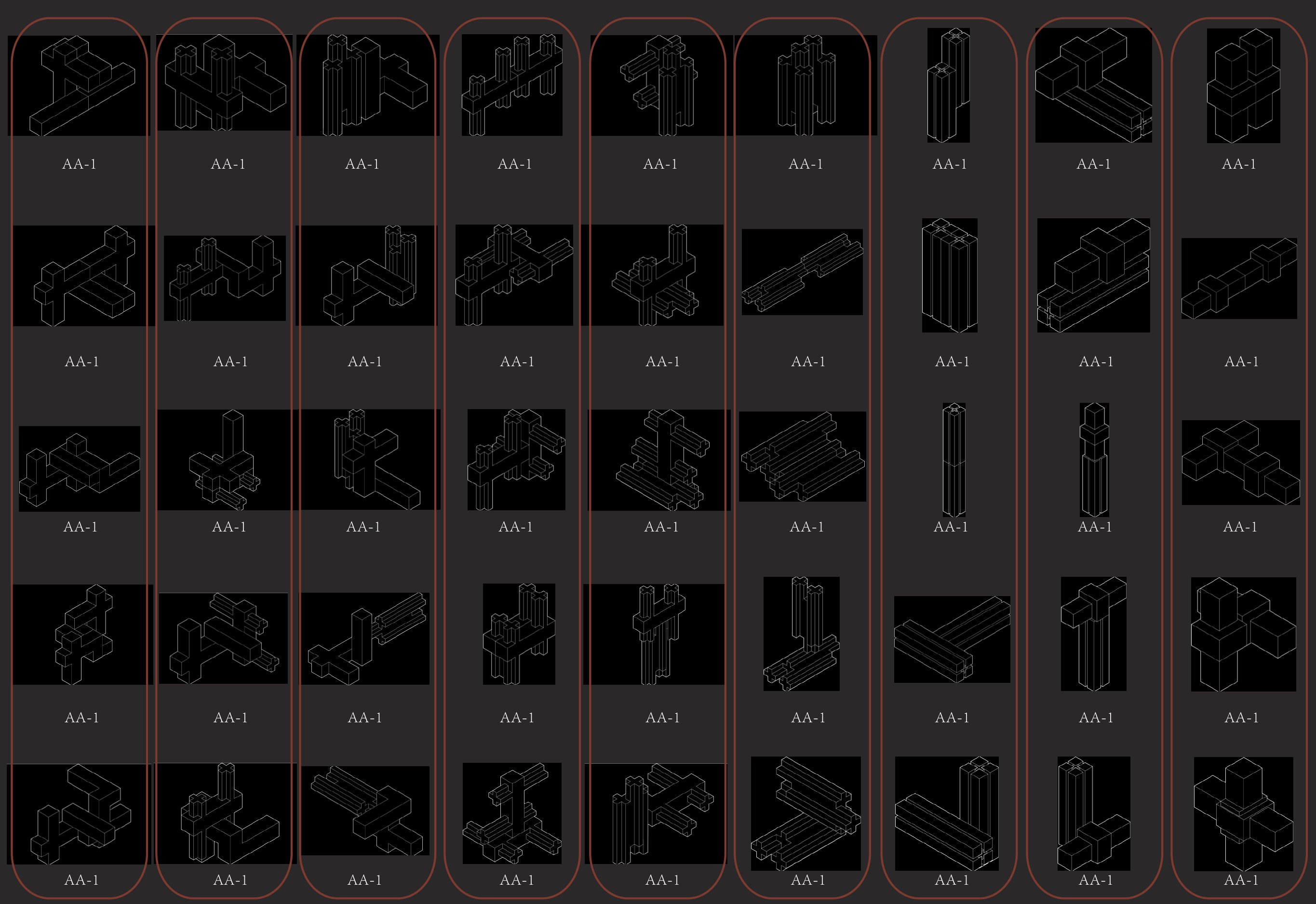
Among the many structures generated, the final unit towers were chosen by the selection rules to serve as the outer boundary: the shell of the suspended part of the design, housing the functional blocks and their combinations.
Scroll from unit to plan
From unit to city: the unit tower variants, their aggregates, and the plan of the city along its central spine.
- 01Unit tower variantsPart of the AA-1 matrix of unit towers.
- 02Determination of unit towersUnit towers combined into larger aggregates.
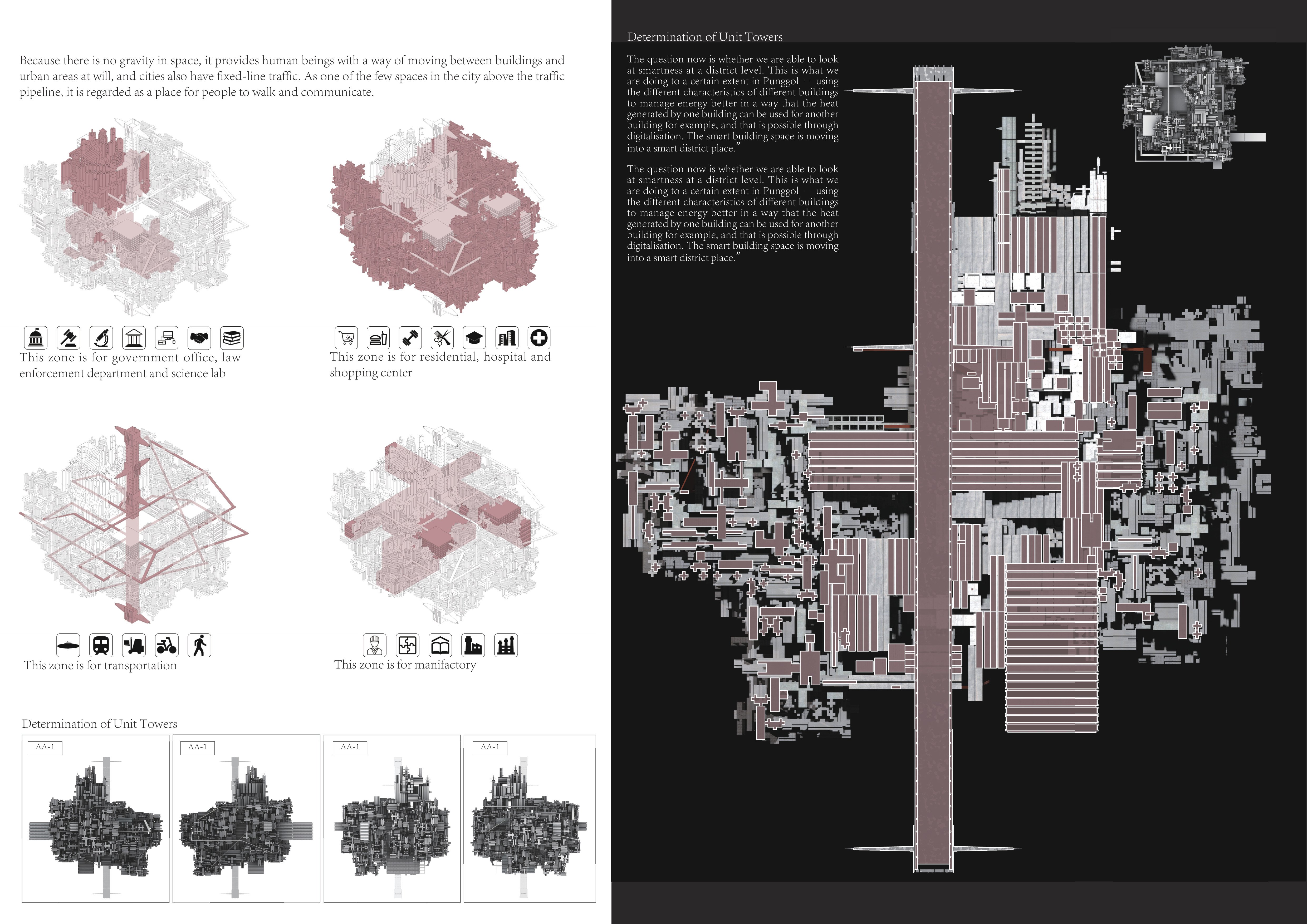
- 03PlanThe city gathered along one spine.


The city is divided into four zones: government offices, law enforcement and science labs; housing, a hospital and shopping; transport; and manufacturing.
Space between buildings
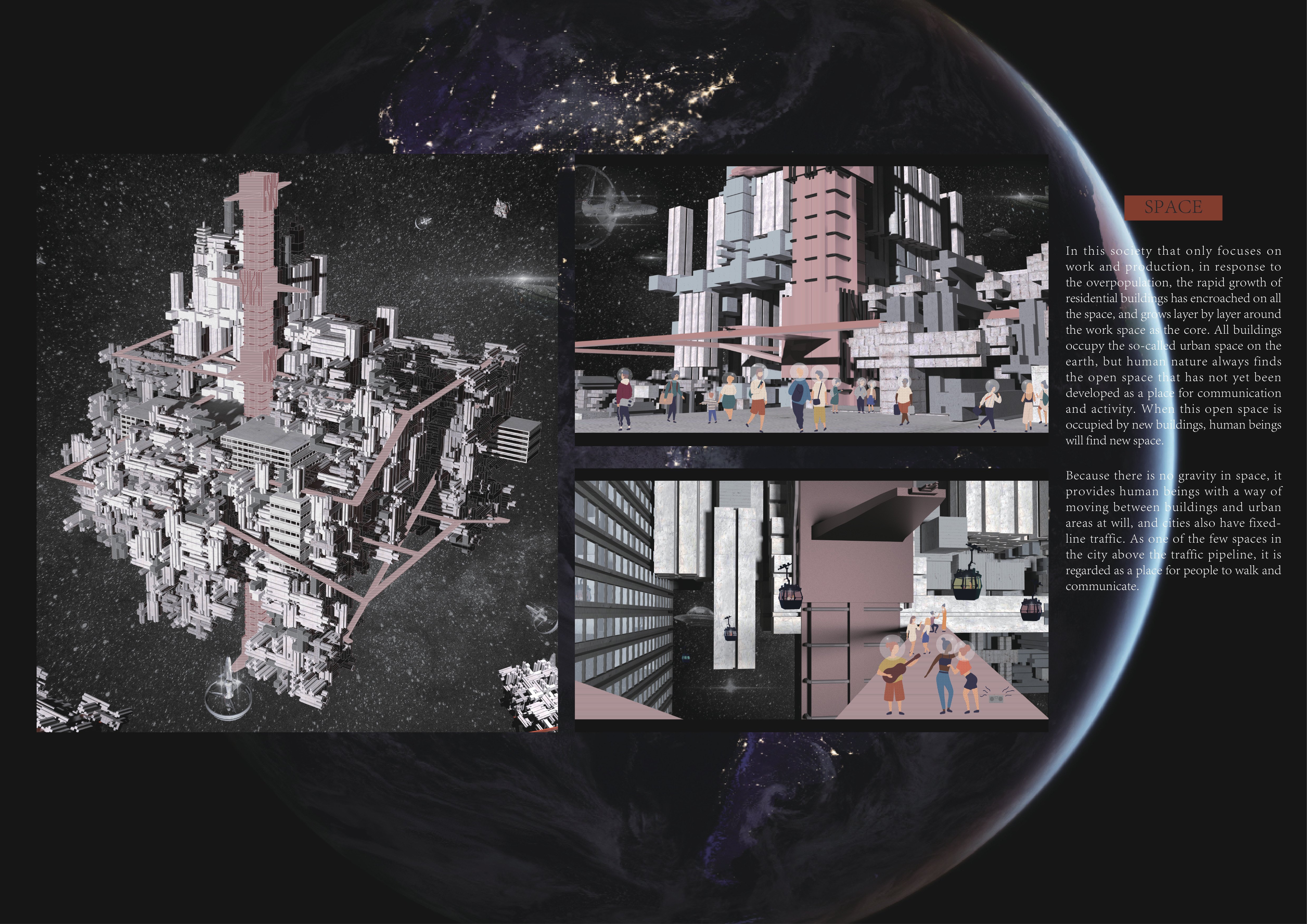
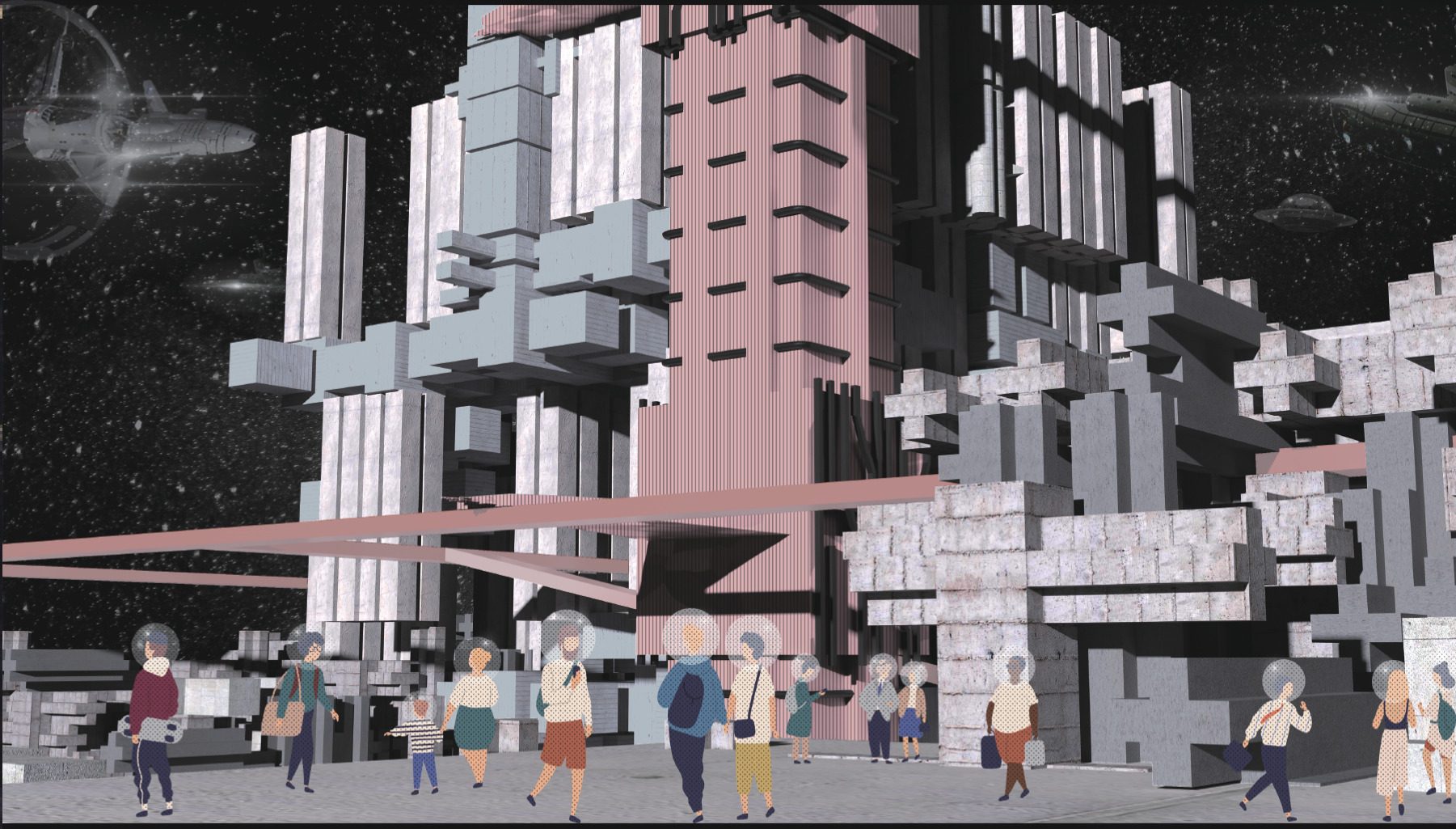
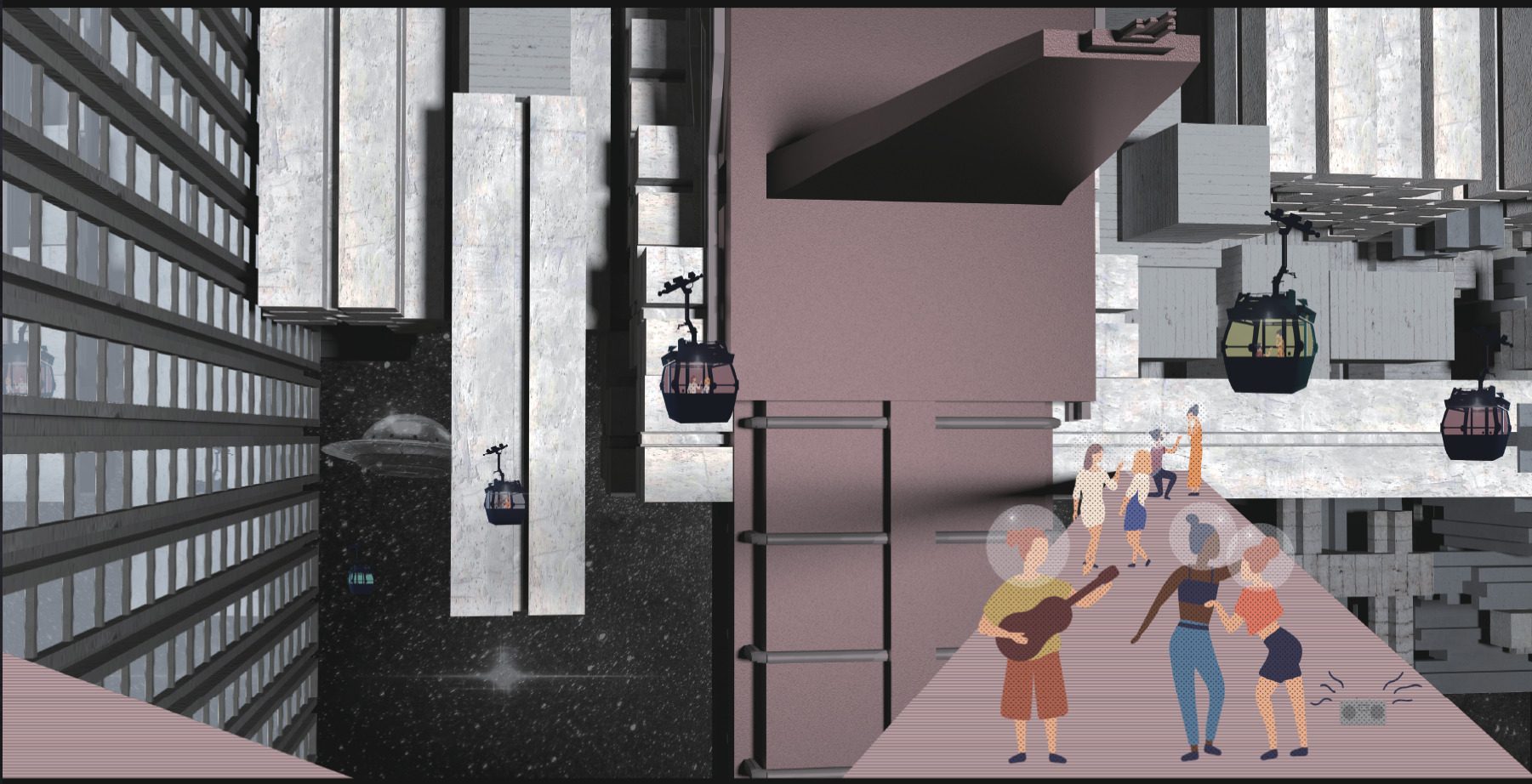
In a society that only focuses on work and production, housing grows layer by layer around the workplace and takes over every open space. Yet people always find the space that has not been built on yet and make it a place to meet; when it is built over, they find new space.
Without gravity, people can move between buildings and districts at will, while the city keeps fixed lines of transport. The walkways above the transport pipes are among the few places left for people to walk and talk.
Presentation boards